














This field manual is designed to be a quick reference tool and will glaze over much of the intricacies of how health systems work. There are many other in-depth references that cover medicine in much more detail.
HERO medics are required to know the following basic medicine without needing to reference this field manual, although advanced reference material may still be needed.
Natural Regeneration, Blood, Clothing, Food and Drink, Health, Medical Supplies, Status Effects, Temperature
The ideal state of peak health for a survivor is to be bright green hydrated, energized, and healthy without any other status effects. This healthy state will greatly increase the chances of surviving ill effects including attacks, wounds, sickness, temperature, etc.




















Your blood level is indicated by the amount of color you see. In the above picture, the left side shows full blood and the right side shows very low blood.
Many negative effects, such as damage and sickness, will affect your blood first before affecting your health. Some negative effects will affect both, but blood will be affected the most.
Loss of blood can occur through bleeding, sickness, vomiting, and adverse temperature effects such as hypothermia, to name a few. Severe loss of blood will lead to unconsciousness and eventually death without treatment.
Blood slowly regenerates when you are hydrated and energized. You can also increase blood with saline bags or blood type-compatible blood bags administered by another survivor.

Survivors that are bleeding will be visibly dripping blood and can see the status effect above. Bleeding may stop on its own, but it is best to apply a clean bandage as soon as possible to prevent further blood loss.
Bandages can be found in medical buildings or improvised by tearing lighter clothing pieces, such as t-shirts, into rags. Bandages can be cleaned using disinfectant spray or alcohol tinctures.

Your health level is indicated by the amount of blurriness in your vision. In the above picture, the left side shows full health and the right side shows about half health.
Taking damage, losing blood, sickness, and other status effects will affect your health negatively. A survivor that reaches zero health will die.
To regenerate health, a survivor must first have full blood. When full blood status is achieved, the green “healing” status effect will appear indicating full blood and regenerating health.
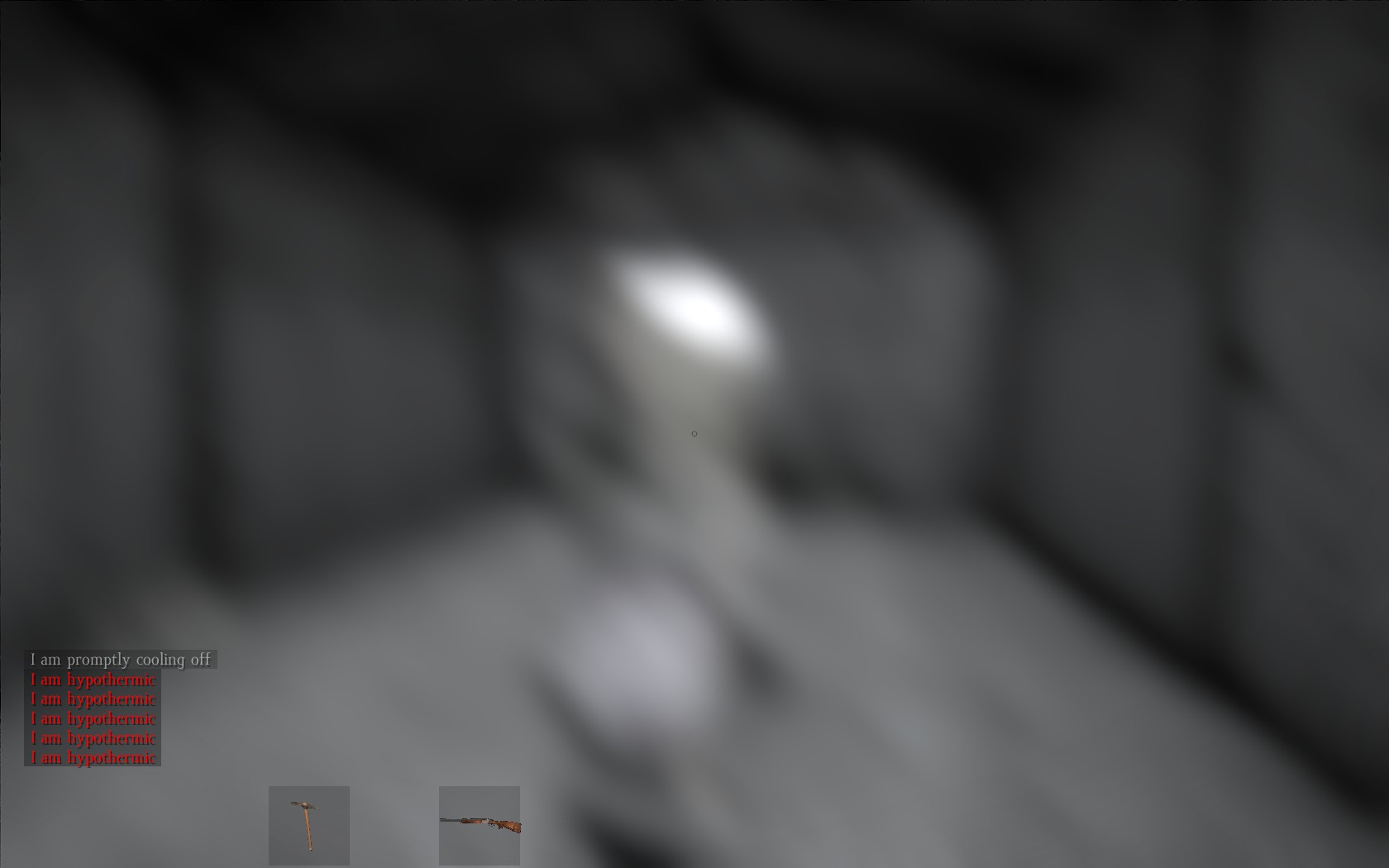
The following image shows extreme blood loss (desaturation of color) and health loss (blurriness of vision) due to hypothermia. This survivor died shortly after the picture was taken.

Limbs can fracture from attacks or falling from heights. Fractured limbs will not be usable by a survivor like having a broken leg will render a survivor unable to walk.
To repair a fractured or broken limb, use a morphine injector or an improvised splint made from sticks and bandages or rags.
Sometimes a survivor may have legs or arms in pain without the indication of a fracture. These are micro-fractures and can be treated the same as a fracture or broken bone.
Unconsciousness is not death. Many survivors fail to realize that you can regain consciousness under certain conditions. For example, if you receive a blow to the head with a shovel, you will likely go unconscious, but will eventually wake up.
Losing too much blood can cause unconsciousness. Also as you take damage, your body will respond with shock. If you do not have enough blood to counter the shock, you will go unconscious.
Recovery from unconsciousness depends upon the situation in which consciousness occurred. In general, if a survivor is regenerating blood, the survivor will come out of the unconscious state.
If the survivor is a member of a group, the survivor may be resuscitated through the use of an epinephrine injector, defibrillator, or CPR. Medical assistance may also be used to control bleeding and provide nourishment until the survivor regenerates blood levels high enough to regain consciousness.
Death is permanent.